
A caravan’s layout determines how you live in it every day: where you sleep, cook, eat, work, relax, and move through the space. Two caravans of identical length can feel completely different because of how the internal space is arranged. The layout that works best depends on how many people are travelling, what activities you prioritise (cooking, working, entertaining, sleeping), and personal preference. There’s no single “best” layout, but there are layouts that suit certain lifestyles better than others, and understanding the common configurations helps you evaluate any van you walk through.

How Layouts Work
Every caravan arranges four zones within a rectangular space: sleeping, cooking, living (lounge/dining), and bathroom. The door is typically on the side, roughly mid-van. The arrangement of these four zones relative to the door and to each other defines the layout. Front bedroom with rear bathroom. Rear bedroom with mid kitchen. Central bathroom with kitchen on one side and bedroom on the other. The permutations are numerous but the zones are always the same four.
When evaluating a layout, walk through it mentally as if living in it. Wake up, get out of bed (is there room?), walk to the kitchen (is the path clear?), make breakfast (is the bench accessible?), sit down to eat (is the dinette comfortable for the whole family?), use the bathroom (is it accessible without climbing over people?). The showroom static experience is very different from the daily living dynamic.
Bed Position
The bed is typically at the front or rear of the van. Front bedroom is the most common layout in Australian caravans and places the bed at the A-frame end with the bathroom and/or kitchen behind it. Rear bedroom layouts place the bed at the back of the van, which can feel more private but reduces the rear storage area.
Best For Couples
Island beds (accessible from both sides) are the most comfortable for couples. You can both get in and out without disturbing each other, which matters more on a Big Lap than you might think. Wall beds (one side against the wall) save space but one person has to climb over the other every time.
Best For Families
East-west beds (running across the width of the van) are shorter but maximise the remaining floor length for living space. Consider bunk beds for kids at the rear, which gives them their own zone and keeps the main bedroom quiet.
Best For Solo Travellers
Wall beds work fine when there’s only one person. You get maximum space efficiency and can often use the area under or around the bed for storage.
Kitchen Position
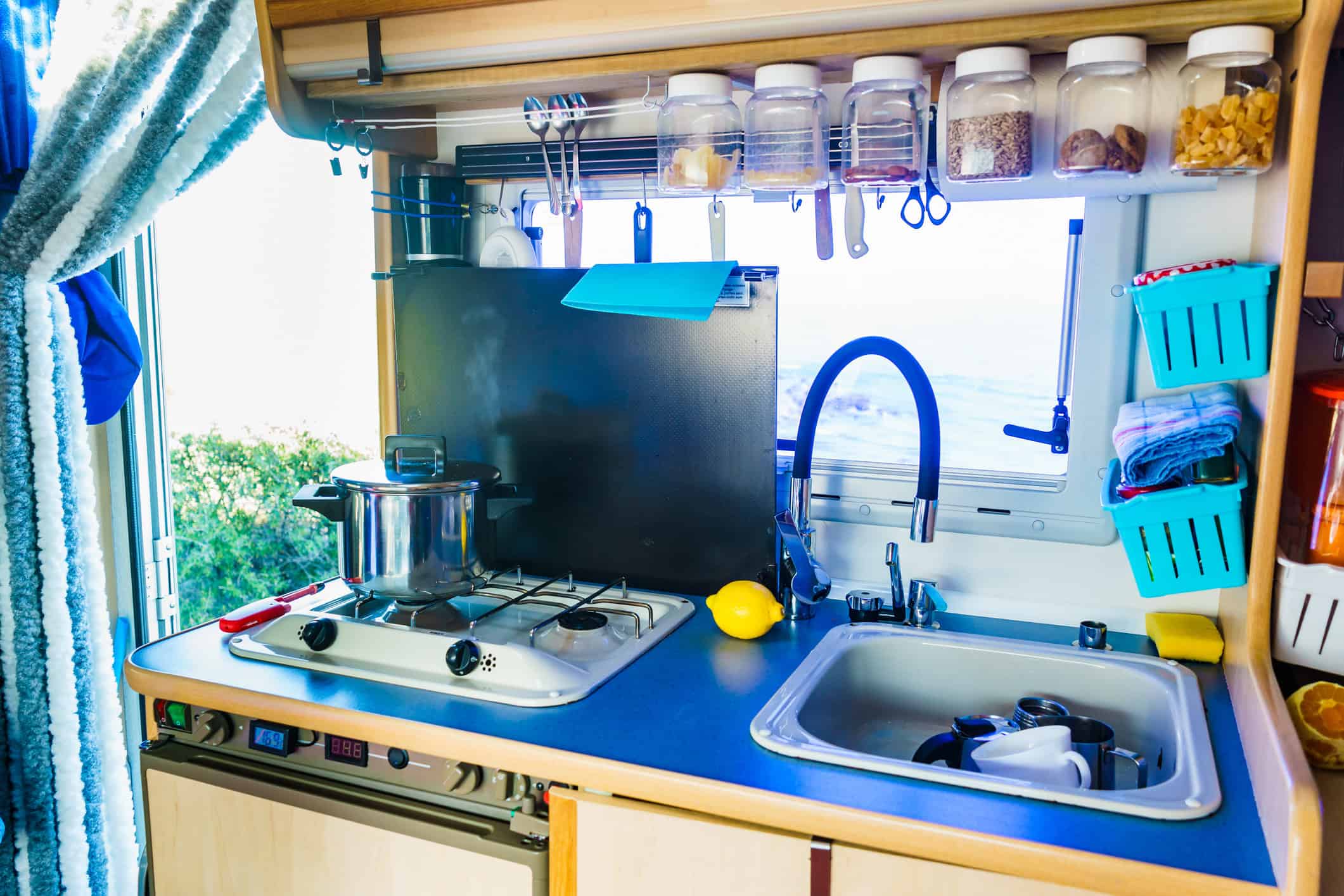
Kitchens are usually positioned mid-van or rear-van, along one wall or in an L-shape. The key factors are bench space (you need enough to prepare a meal for your family), proximity to the door (carrying groceries in), and ventilation (cooking smells need somewhere to go). A kitchen near the door with a window above the sink is the most practical configuration for daily use.
Best For Keen Cooks
L-shaped kitchens offer the most bench and storage space. Look for layouts that place the kitchen away from the main traffic flow so you’re not constantly stepping around the cook.
Best For Simple Meal Prep
Galley-style kitchens (straight line along one wall) work well if you mainly do basic cooking. They’re space-efficient and keep the kitchen contained to one zone.
Best For Entertaining
Kitchens that open directly onto the dining area make serving meals easier and keep the cook connected to family or guests. Avoid layouts where the kitchen is completely separated from the living areas.
Lounge & Dining
The lounge/dining area is where you spend awake time inside the van: eating, reading, working on a laptop, playing games with kids, watching a show. The main options are a club lounge (two facing lounges), a café dinette (booth-style table and seats), an L-shaped lounge, or a combination. Many Big Lappers find that the lounge/dining area matters more than they expected, because rain days, cold evenings, and work sessions happen more often than brochures suggest.
Best For Couples
Club lounges are comfortable for relaxing together in the evenings. You can both stretch out, read books, or watch a movie. They convert to a double bed for guests but can feel awkward for daily dining.
Best For Families
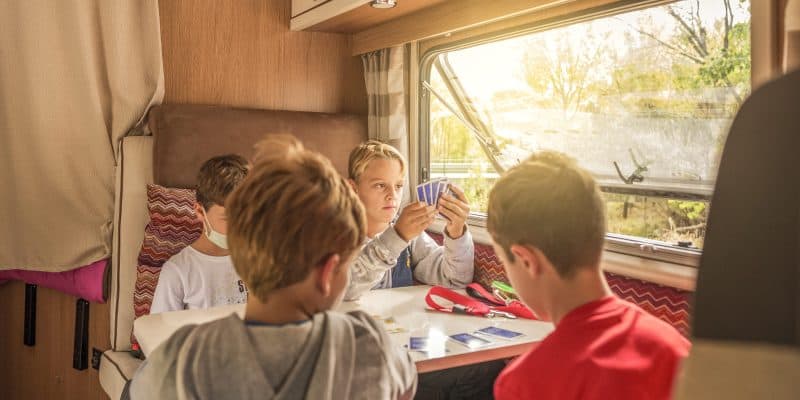
Café dinettes are great for eating meals together and give kids a proper table for homework, games, or activities. They’re less comfortable for adult lounging but more practical for family life.
Best For Remote Workers
Look for layouts with a proper dinette table that’s positioned near a window for natural light. L-shaped lounges with a side table can work but aren’t ideal for laptop work for extended periods.
Bathroom Position
Bathrooms sit at the front, mid, or rear of the van. Rear bathrooms are the most common in modern Australian caravans: they’re accessible without walking through other living zones and can be built with full-width shower space. Mid-van bathrooms work as a divider between bedroom and living areas, providing sound and visual separation. Front bathrooms are rare but exist in some layouts. The key is that the bathroom is accessible from the sleeping area without navigating obstacles in the dark at 2am.
Best For Couples
Rear bathrooms offer maximum privacy and space. You’re not disturbing your partner when using the bathroom at night, and morning routines don’t interfere with sleeping.
Best For Families
Mid-van bathrooms can separate adult and kids’ zones effectively. Parents get the front bedroom, kids get the rear bunks or dinette area, and the bathroom is accessible to both without crossing through private spaces.
Best For Extended Travel
Full-width rear bathrooms with separate shower cubicles are worth the extra length if you’re planning to live in the van for months. Cramped bathrooms become a daily frustration quickly.

Choosing Your Layout
The best layout matches your travel style, group size, and daily priorities. Here’s how to narrow down your options.
For Couples Travelling Together
Front bedroom with island bed, mid kitchen near the door, rear bathroom. This keeps the bedroom private, puts the kitchen where it’s practical, and gives the bathroom its own zone. It’s the most popular layout for good reason.
For Families With Kids
Front bedroom for parents, mid kitchen everyone can access, rear bunks with bathroom. Kids get their own space at the back, parents get privacy at the front, and the kitchen is central where it gets used most.
For Solo Travellers
Compact layouts with everything accessible work best. You don’t need separation between zones, so prioritise space efficiency and storage. Wall beds, galley kitchens, and corner bathrooms maximise living space.
For Remote Workers
Layouts with dedicated workspace matter more than you think. Look for a proper dinette table positioned near a window, with the kitchen nearby for coffee breaks. Avoid club lounges if you work from the van regularly.
For Entertaining and Socialising
Open-plan layouts that flow from kitchen to dining to lounge work best. Avoid layouts where visitors have to walk through bedrooms or where the kitchen is completely separated from social areas.
Test the bathroom accessibility at night. Can you get from bed to toilet without turning on lights or climbing over furniture? This simple test eliminates poor layouts quickly.
- Every caravan arranges four zones: sleeping, cooking, living, and bathroom. How they’re arranged defines the layout.
- Walk through a layout mentally as if living in it: morning routine, cooking, eating, working, sleeping. Static viewing misses daily-use problems.
- Match your layout to your travel style: couples need bedroom privacy, families need separate zones for kids and adults, solo travellers prioritise efficiency.
- The lounge/dining area matters more than you think. Rain days, cold evenings, and work sessions happen often on extended trips.
- Test bathroom accessibility from the bedroom at night. This simple check eliminates bad layouts quickly.
Comment (0)