
- What Drives Caravan Prices
- The Budget Tier: $20,000 to $40,000
- The Mid-Range Tier: $40,000 to $70,000
- The Premium Tier: $70,000 to $100,000
- The Luxury Tier: $100,000 to $150,000
- The Ultra-Luxury Tier: $150,000+
- New vs Used: Where The Value Is
- Budget If You Need Specific Features
- How Much Should You Actually Spend?
The caravan is the centrepiece of your Big Lap, and it’s almost certainly the largest single purchase you’ll make for the trip. Prices range from $20,000 for a serviceable used van to $200,000+ for a fully spec’d luxury off-road rig. That spread makes the decision overwhelming, because every dollar more on the van is a dollar less for the trip itself.
This guide breaks down what you get at each price point, where the real value sits, and how to decide what’s worth spending on versus what’s marketing fluff. The goal isn’t to tell you how much to spend. It’s to help you understand exactly what your money buys so you can make a choice that fits your budget, your trip, and your towing capacity.

A $25,000 van and a $120,000 van both complete the Big Lap. The difference is comfort, capability, and what you’re willing to trade off.
What Drives Caravan Prices
Caravan pricing isn’t random. Six factors account for most of the price difference between a $25,000 used van and a $150,000 new one.
Age and condition. The single biggest factor. Caravans depreciate roughly 10 to 15% in the first year and 5 to 8% per year after that. A 5-year-old van in good condition typically sells for 50 to 65% of its new price. A 10-year-old van might be 30 to 45%. This depreciation is your advantage as a buyer.
Construction quality. Cheap caravans use timber frames, basic seals, and lightweight materials that deteriorate faster. Premium vans use aluminium or composite frames, better insulation, and higher-quality fittings. The difference shows after 5 years of hard use: cheap vans develop leaks, rattle, and need constant repair. Quality vans hold up and hold value.
Off-road capability. Independent suspension, increased ground clearance, reinforced chassis, heavy-duty axles, stone guards, and water tank protection add $10,000 to $30,000 to the price. If you’re sticking to sealed roads and well-maintained gravel, you don’t need full off-road spec. If you’re planning serious outback tracks, you do.
Power and water systems. A basic van with AGM batteries and 100W of solar costs less than one with 400Ah of lithium, 600W of solar, a 3000W inverter, and a battery management system. The premium power system costs $5,000 to $15,000 more but enables extended off-grid camping without generators or caravan park hook-ups. If you plan to free camp regularly, this investment pays for itself in saved campsite fees.
Size and layout. Bigger vans cost more: more materials, more systems, more everything. A 16-foot single-axle van is significantly cheaper than a 22-foot dual-axle family van with bunks, a full ensuite, and a slide-out kitchen.
Brand. Established brands with strong reputations (Jayco, Retreat, Kokoda, Zone, New Age, Evernew) command higher prices than unknown or newer brands. You’re partly paying for resale value, warranty support, and spare parts availability. That premium has real value on the Big Lap, where finding a panel beater who can work on an obscure brand is genuinely difficult.
The Budget Tier: $20,000 to $40,000
What you’re buying: A used caravan, typically 10 to 20 years old, from brands like Jayco, Windsor, Coromal, or Roadstar. Basic layouts with a fixed bed, small kitchen, potentially a small ensuite or external shower. AGM batteries, minimal solar (if any), basic 12V systems. Single or dual axle depending on size.
What’s good: The price. A $25,000 van means more money for fuel, campsite fees, and experiences. Lower financial risk if you decide the Big Lap isn’t for you; you can sell without taking a massive hit. Simpler systems mean fewer things to go wrong.
What’s not: Older vans need more attention. Seals deteriorate, appliances fail, water damage can be hidden. Limited off-grid capability means more caravan park stops (which cost money, partly offsetting the lower purchase price). Less insulation means hotter summers and colder winters. Ride quality and towing stability are often inferior to modern vans.
Best for: Couples on a tight budget, first-time caravanners testing whether full-time travel suits them, anyone who already owns a suitable tow vehicle and wants to minimise upfront costs.
At this price point, a pre-purchase inspection ($300 to $500) is essential. Water damage, chassis rust, and electrical faults can turn a $25,000 bargain into a $35,000 money pit. Never buy a used caravan without a qualified inspector checking it first.

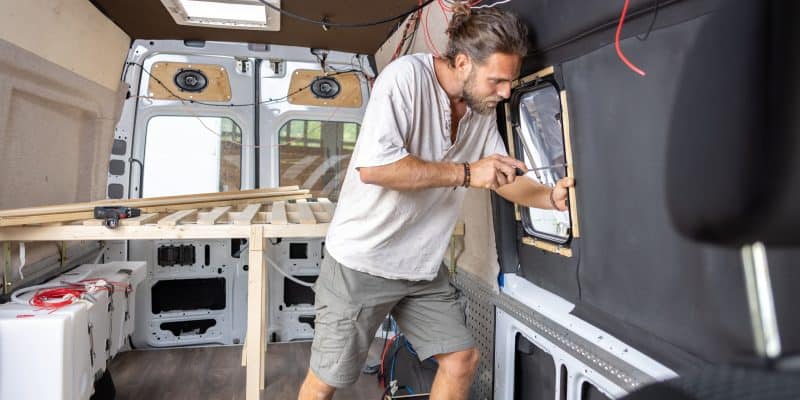
An older van in good condition is the best-value entry point into the Big Lap. Just get it inspected before you buy.
The Mid-Range Tier: $40,000 to $70,000
What you’re buying: At the lower end ($40,000 to $55,000), you’re still looking at vans around 10 years old from reputable brands like Jayco, New Age, and Snowy River. At the higher end ($55,000 to $70,000), you get into vans that are 2 to 5 years old, or near-new models from brands like Avan, Viscount, and Snowy River with better construction, modern layouts, upgraded power systems (often lithium-ready or lithium-equipped), more solar, better insulation, and improved towing stability.
What’s good: The balance between cost and capability. These vans are modern enough to be reliable and comfortable for 12+ months on the road. Power systems handle off-grid camping. Build quality has improved significantly in recent years. Warranty coverage on newer models provides peace of mind.
What’s not: At the lower end ($40,000 to $50,000), you’re still buying used and the usual caveats apply: inspect thoroughly, check service history, verify no water damage. At the upper end ($60,000 to $70,000), you’re approaching new entry-level territory where value becomes more subjective.
Best for: The majority of Big Lappers. Families who need space and reliability. Couples who want comfort without excess. Anyone planning 6+ months on the road and wanting a van that just works.
The Premium Tier: $70,000 to $100,000
What you’re buying: This is where you get into new vans from brands like Design RV, New Age, Supreme, Radiant, Jayco, and Leader, plus older top-level vans from premium brands like Crusader, Kedron, Lotus, and Vacationer. These feature improved construction, better layouts, upgraded power systems, and enhanced comfort features.
What’s good: New or near-new vans with warranty coverage. Better build quality and modern features. Good balance of value and capability for extended travel. Established brands with strong dealer networks.
What’s not: Significant step up in price without necessarily dramatic improvements in core functionality. Still depreciation risk on new vans. May require larger tow vehicles depending on specifications.
Best for: Buyers who want new van security with established brand backing. Those planning extended trips who value warranty peace of mind. Families needing proven layouts and reliability.
The Luxury Tier: $100,000 to $150,000
What you’re buying: High-end caravan brands like Wonderland RV, Retreat, Atlas, and JB Caravans, plus starting-level models from ultra-premium brands like Lotus and Vacationer. Full off-road capability (if chosen), premium lithium power systems, 400W+ solar, composite or aluminium construction, independent suspension, top-tier appliances, and luxury finishes.
What’s good: Everything is new, under warranty, and built to high specifications. Premium build quality means fewer problems on the road. Full off-grid capability means total freedom in campsite choice. Better insulation, better ride, better everything. Strong resale value on premium brands.
What’s not: The price represents a significant investment. Every dollar above what you need is a dollar that could extend your trip. These vans are often heavy, requiring large, capable tow vehicles. New caravans depreciate fastest in year one.
Best for: Retirees investing in years of travel, not just one trip. Families who need the space and durability. Anyone planning extended off-road travel where build quality is a safety issue, not a luxury.
The Ultra-Luxury Tier: $150,000+
What you’re buying: The ultimate in caravan luxury and capability. Ultra-luxury brands like Titanium and Sunland, plus top-tier models from Lotus and Vacationer. These feature the finest construction materials, cutting-edge technology, custom layouts, and specifications that rival high-end motorhomes.
What’s good: The absolute best in comfort, capability, and construction quality. Custom layouts tailored to specific needs. Latest technology and premium appliances throughout. Built for decades of use with minimal maintenance.
What’s not: The price puts these beyond most budgets. Require very capable (and expensive) tow vehicles. The law of diminishing returns applies: you’re paying premium prices for marginal improvements over the luxury tier.
Best for: Those for whom budget is no concern and who want the absolute best. Buyers planning permanent or semi-permanent travel lifestyles. Anyone who views the caravan as a long-term home investment rather than just a travel tool.
New vs Used: Where The Value Is
The honest answer: the best value in the caravan market is a 3 to 5 year-old used van in good condition from a reputable brand. It’s already taken the biggest depreciation hit, the original owner has found and fixed the teething issues, and it’s modern enough to have decent power systems and layouts.
New vans have the advantage of warranty, zero wear, and the ability to spec exactly what you want. But they depreciate 10 to 15% the moment you tow them off the lot. On a $80,000 van, that’s $8,000 to $12,000 in lost value before you’ve spent a single night in it.
Used vans have risk: hidden water damage, worn components, unknown history. This risk is manageable with a professional inspection, a thorough personal check, and asking the right questions. The money you save by buying used goes directly into making the trip better or longer.

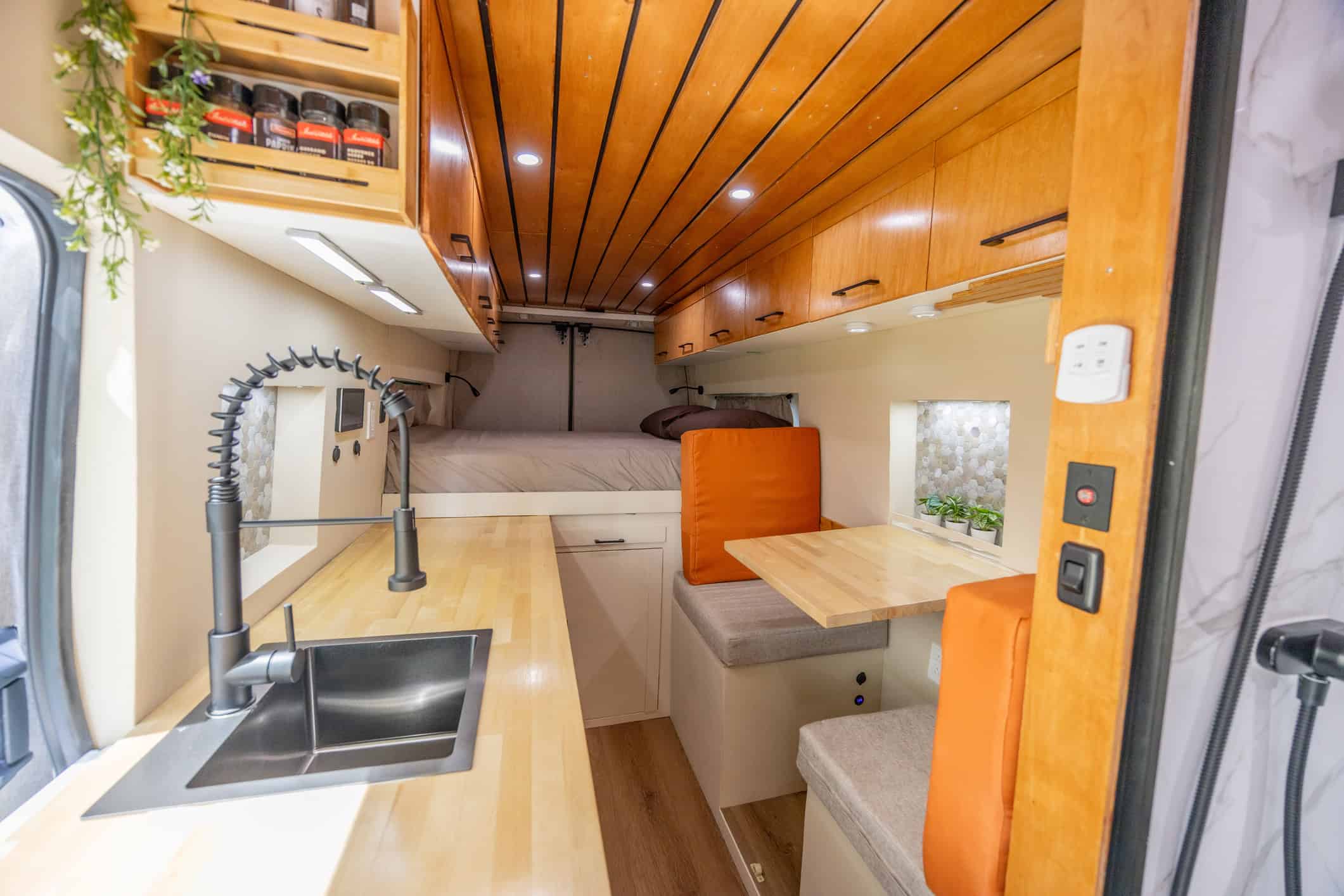
A 3 to 5 year-old van in good condition is the sweet spot. Someone else paid the depreciation; you get the value.
Budget If You Need Specific Features
Your specific needs will push you towards certain price brackets, regardless of your initial budget.
If you need bunks: Family layouts with bunks start around $40,000 to $50,000 for older models, but you’ll want to budget $60,000 to $80,000 for something reliable enough for extended family travel. New family vans from reputable brands typically start around $80,000 to $100,000. The extra space and weight capacity needed for family travel pushes prices up significantly.
If you need off-road capability: True off-road capability starts around $60,000 for older models from brands like Crusader or Kedron, but realistic budgets for new off-road vans are $80,000 to $120,000+. Independent suspension, reinforced chassis, stone protection, and heavy-duty components all add cost. Don’t compromise on off-road capability if you’re planning serious remote travel, as repairs in the outback are expensive and potentially dangerous.
If you need specific features like bunks or off-road capability, start with that requirement and work backwards to find your minimum realistic budget. Compromising on essential features to hit a price target usually ends in regret.
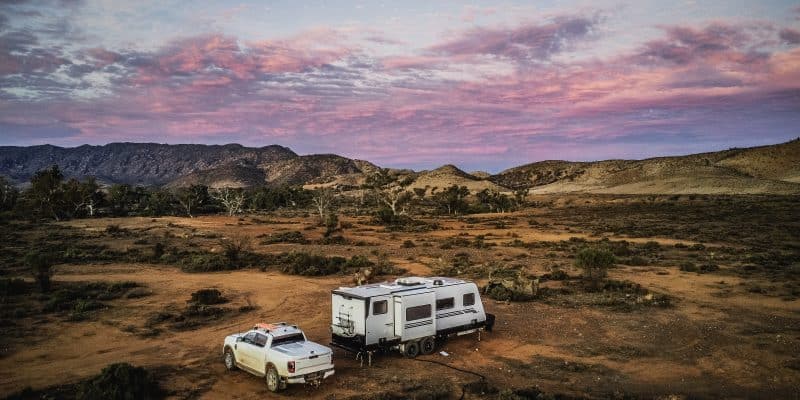

If you need bunks or off-road capability, budget accordingly. These features push you into higher price brackets but they’re not optional if you need them.
How Much Should You Actually Spend?
Here’s the framework that cuts through the noise.
Rule 1: Never spend so much on the van that you can’t afford the trip. A $100,000 caravan sitting in the driveway because you can’t afford fuel is worse than a $40,000 van on the road. The van is a tool for the trip, not the trip itself.
Rule 2: Match the van to the tow vehicle, not the other way around. If your vehicle can safely tow 2,000kg, buy a van under 2,000kg ATM. Don’t buy a 3,000kg van and then need a $70,000 tow vehicle to match.
Rule 3: Spend on what affects your daily life. A good mattress matters more than premium exterior cladding. A reliable power system matters more than a brand-name kitchen tap. Prioritise the things you’ll interact with every single day for months.
Rule 4: Budget for the total, not just the van. The van is one line in a larger budget that includes the vehicle, gear, preparation, insurance, and road costs. A $50,000 van in a $100,000 total budget leaves room for everything else. A $90,000 van in the same budget does not.
- Budget tier ($20k to $40k used): gets you on the road at minimum cost. Expect 10-20 year old vans that need more maintenance and caravan park stops.
- Mid-range tier ($40k to $70k): the sweet spot for most Big Lappers. From 10-year-old quality brands to near-new entry models.
- Premium tier ($70k to $100k): new vans from established brands plus older luxury models. Good balance of features and value.
- Luxury tier ($100k to $150k): high-end brands with premium construction and full capability. For serious long-term travel.
- Ultra-luxury ($150k+): the absolute best in caravan luxury and technology. For those with unlimited budgets.
- Best value: a 3 to 5 year-old used van from a reputable brand. Already depreciated, teething issues resolved, modern enough for extended travel.
- Budget extra for bunks ($60k to $80k minimum) and off-road capability ($80k to $120k+ for new).
- Never spend so much on the van that you can’t afford the trip. The van is a tool for the experience, not the experience itself.
Comment (0)